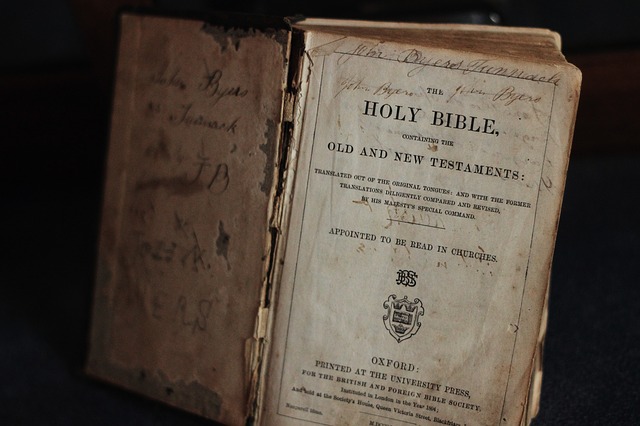
 The Holy Bible is the most recognized and revered book in all of Christianity. For hundreds of years, people have found the good word of God within its pages. Members of The Church of Jesus Christ of Latter-day Saints are no exception. Sometimes those of other faiths wonder if Mormons believe in the Bible, because they have additional scriptures, including the Book of Mormon: Another Testament of Jesus Christ—which is sometimes called the “Mormon Bible.” To this, Elder M. Russell Ballard said:
… We believe, revere, and love the Holy Bible. We do have additional sacred scripture, including the Book of Mormon, but it supports the Bible, never substituting for it. …
We love the Bible and other scriptures. That may be surprising to some who may not be aware of our belief in the Bible as the revealed word of God. It is one of the pillars of our faith, a powerful witness of the Savior and of Christ’s ongoing influence in the lives of those who worship and follow Him. … It is the bedrock of all Christianity.
The Bible is the first book in the Mormon scriptural canon, which also includes the Book of Mormon—Another Testament of Jesus Christ, the Doctrine & Covenants and the Pearl of Great Price.
What Do Mormons Believe About the Bible?
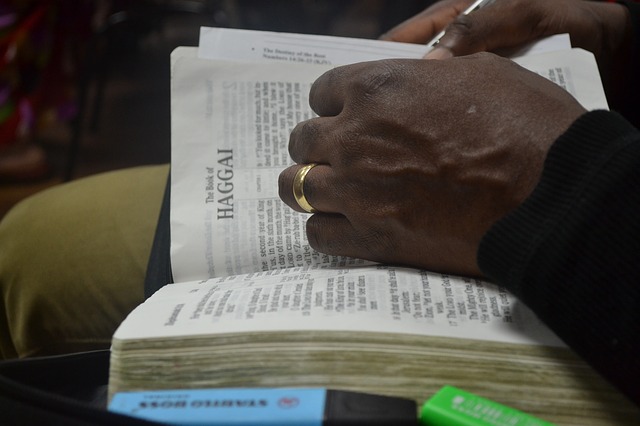
Mormons believe the Bible to be the word of God as far as it is translated correctly. (See Articles of Faith 1:8.) Joseph Smith, the founding prophet of The Church of Jesus Christ, taught that “many important points touching the salvation of men had been taken from the Bible, or lost before it was compiled.” He also taught that the Bible was correct as “it came from the pen of the original writers,” but that “ignorant translators, careless transcribers, or designing and corrupt priests have committed many errors” (History of the Church, 1:245; 6:57).
But this does not diminish the importance of the Bible as scripture. Elder Ballard said:
It is a miracle that the Bible’s 4,000 years of sacred and secular history were recorded and preserved by the prophets, apostles, and inspired churchmen.
It is a miracle that we have the Bible’s powerful doctrine, principles, poetry, and stories. But most of all, it is a wonderful miracle that we have the account of the life, ministry, and words of Jesus, which was protected through the Dark Ages and through the conflicts of countless generations so that we may have it today.
And the late President and Prophet Ezra Taft Benson said:
I love the Bible, both the Old and the New Testaments. It is a source of great truth. It teaches us about the life and ministry of the Master. From its pages we learn of the hand of God in directing the affairs of His people from the very beginning of the earth’s history. It would be difficult to underestimate the impact the Bible has had on the history of the world. Its pages have blessed the lives of generations.
But as generation followed generation, no additional scripture came forth to the children of men. Without additional revelation to guide them, men began to interpret the Bible differently. Numerous churches and creeds developed, each using the Bible as its authoritative source.
But this in no way lessens the worth of the Bible. That sacred and holy book has been of inestimable worth to the children of men.
From Ancient Records to a Printed Book
The preservation of God’s word over hundreds and thousands of years is truly a divinely inspired work. Elder Robert D. Hales said:
Originally the Bible was written in Hebrew and Greek, languages unknown to common people throughout Europe. Then, about 400 years after the Savior’s death, the Bible was translated by Jerome into Latin. But still the scriptures were not widely available. Copies had to be written by hand, usually by monks, each taking years to complete.
Then, through the influence of the Holy Ghost, an interest in learning began to grow in the hearts of people. This Renaissance or “rebirth” spread throughout Europe. In the late 1300s, a priest named John Wycliffe initiated a translation of the Bible from Latin into English. Because English was then an emerging, unrefined language, church leaders deemed it unsuitable to convey God’s word. Some leaders were certain that if people could read and interpret the Bible for themselves, its doctrine would be corrupted; others feared that people with independent access to the scriptures would not need the church and would cease to support it financially. Consequently, Wycliffe was denounced as a heretic and treated accordingly. After he died and was buried, his bones were dug up and burned. But God’s work could not be stopped.
While some were inspired to translate the Bible, others were inspired to prepare the means to publish it. By 1455 Johannes Gutenberg had invented a press with movable type, and the Bible was one of the first books he printed. For the first time it was possible to print multiple copies of the scriptures and at a cost many could afford.
William Tyndale was one of the next figures to continue the work. Elder D. Todd Christofferson said:
Tyndale, born in England about the time Columbus sailed to the new world, was educated at Oxford and Cambridge and then became a member of the Catholic clergy. He was fluent in eight languages, including Greek, Hebrew, and Latin. Tyndale was a devoted student of the Bible, and the pervasive ignorance of the scriptures that he observed in both priests and lay people troubled him deeply. …
He sought the approval of church authorities to prepare a translation of the Bible in English so that all could read and apply the word of God. It was denied—the prevailing view being that direct access to the scriptures by any but the clergy threatened the authority of the church and was tantamount to casting “pearls before swine” (Matthew 7:6).
Tyndale nevertheless undertook the challenging work of translation. In 1524 he traveled to Germany, under an assumed name, where he lived much of the time in hiding, under constant threat of arrest. With the help of committed friends, Tyndale was able to publish English translations of the New Testament and later the Old Testament. The Bibles were smuggled into England, where they were in great demand and much prized by those who could get them. They were shared widely but in secret. The authorities burned all the copies they could find. Nevertheless, within three years of Tyndale’s death, God did indeed open King Henry VIII’s eyes, and with publication of what was called the “Great Bible,” the scriptures in English began to be publicly available. Tyndale’s work became the foundation for almost all future English translations of the Bible, most notably the King James Version.
Tyndale was neither the first nor the last martyr for this book. But it is through the sacrifice of these men that the Bible is so readily available today—and has been a blessing to so many throughout the world. Elder Ballard said:
Tens of millions of individuals have come to a faith in God and in Jesus Christ through seeking truth in the Holy Bible. Countless numbers of them had nothing but the Bible to feed and guide their faith.
Because of the efforts of the reformers, “the Bible became a household possession. The word of God was read around the family fireside of the lowly as well as the parlors of the great” (John A. Widtsoe, in Conference Report, Apr. 1939, 20).
The Bible & Its Role in the Restoration
The Bible played an essential role in the restoration of Christ’s Church on the earth today. Elder Ballard said:
Millions of families have come together seeking to find the Church of Jesus Christ through their study of the Bible. One of those families, in the early 1800s in upstate New York, was the family of Joseph Smith Sr. One of his sons was Joseph Smith Jr., who searched the Bible, seeking to know which of the many denominations was the same as the Church that Jesus Christ organized. He was prompted by the words of the Bible to pray for further spiritual light and knowledge from God. Determined to seek the wisdom promised in the holy scriptures, Joseph knelt in humble prayer early in the spring of 1820. Oh, what marvelous light and truth were shed upon him that day as he beheld the glorious manifestation of God the Father and the Lord Jesus Christ! Once again God called a prophet as He did in the days of Noah, Abraham, and Moses.
Joseph Smith, Jr., became the restoring prophet of The Church of Jesus Christ. President Benson said:
What followed was the glorious vision that commenced the restoration of the fulness of the gospel of Jesus Christ to the earth. That vision also began the process of bringing forth new scripture to stand shoulder to shoulder with the Bible in bearing witness to a wicked world that Jesus is the Christ and that God lives and loves His children and is still intimately involved in their salvation and exaltation.
The new scriptures—brought forth through Joseph Smith— complement the teachings of the Bible, they do not replace them. Elder Ballard explained:
Those who join this Church do not give up their faith in the Bible—they strengthen it. The Book of Mormon does not dilute nor diminish nor de-emphasize the Bible. On the contrary, it expands, extends, and exalts it. The Book of Mormon testifies of the Bible, and both testify of Christ.
The first testament of Christ is the Bible’s Old Testament, which predicted and prophesied of the coming of the Savior, His transcendent life, and His liberating Atonement. The second Bible testament of Christ is the New Testament, which records His birth, His life, His ministry, His gospel, His Church, His Atonement, and His Resurrection, as well as the testimonies of His Apostles.
The third testament of Christ is the Book of Mormon, which also foretells Christ’s coming, confirms the Bible’s account of His saving Atonement, and then reveals the resurrected Lord’s visit to the earth’s other hemisphere. The subtitle of the Book of Mormon, the clarifying purpose statement printed on the cover of every copy, is “Another Testament of Jesus Christ.”
Each of these three testaments is a part of the great, indivisible whole of the Lord’s revealed word to His children. They contain the words of Christ, which we have been admonished to feast upon as a means of qualifying for eternal life (see 2 Nephi 31:20). Those who think that one part is more important or more true than the other parts are missing some of the beauty and completeness of the canon of ancient scripture.
The Joseph Smith Translation of the Bible

Joseph Smith receiving revelation at the organization of The Church of Jesus Christ of Latter-day Saints.
As part of his duties as the prophet of The Church of Jesus Christ, Joseph Smith was commanded by God to make an inspired translation of the King James Version of the Bible. Professor David Rolph Seely, of the Brigham Young University department of ancient scripture, explained the reason for this:
The Prophet Joseph Smith loved the Bible. He regularly read it, revered its teachings, and found divine truths in its writings. … Yet the Prophet’s reverence for the Bible was accompanied by his awareness of its incompleteness and of problems with the transmission of its texts.
The late Professor Robert J. Matthews, of the Brigham Young University department of ancient scripture, further explained:
Joseph Smith also stated that the Bible had not been preserved in its original purity: “We believe the Bible to be the word of God as far as it is translated correctly” (Articles of Faith 1:8). The word translated as it is used here must be understood to include the idea of transmission. That is, error has occurred not only in the translation from one language to another, but also in the transcription of the text from manuscript to manuscript, even in the same language. The Bible has apparently suffered mostly from omissions—it is not particularly erroneous, but many important items are missing, and this in turn leaves some parts unclear.
Thus, Joseph Smith was to make a translation of the Bible. However, this was not to be a translation in the usual sense. Professor Seely wrote:
The Prophet did not “translate” the Bible in the traditional sense of the word—that is, go back to the earliest Hebrew and Greek manuscripts to make a new rendering into English. Rather, he went through the biblical text of the King James Version and made inspired corrections, revisions, and additions to the biblical text. Both the Lord and Joseph Smith consistently refer to the process of these inspired revisions and additions as “translation” (Doctrine & Covenants 76:15; Doctrine & Covenants 124:89). The Prophet acknowledged the revelatory nature of this translation work.
Most of the prophet’s translation of the Bible was completed by 1833. However, the Bible Dictionary explains:
Joseph … continued until his death in 1844 to make modifications while preparing a manuscript for publication. Though he published some parts of the translation during his lifetime, it is possible that he would have made additional changes had he lived to publish the entire work.
Professor Matthews wrote:
There has been an assumption that the JST was deliberately not published because it was grossly unfinished. … The basic conclusion seems to be that the work of translation was acceptable as far as the Lord required it of the Prophet at that time, but the manuscript was not fully prepared for the press. … That the work was not perfected is clear. But it is equally clear that it was nearer the stage necessary for publication than casual observers have realized.
Although the Prophet Joseph’s Bible Translation was never published in his lifetime, it was published. Professor Seely explained:
The manuscripts of the Joseph Smith Translation were preserved by Emma Smith, the Prophet’s wife, and eventually became property of the Reorganized Church of Jesus Christ of Latter Day Saints, which published various editions of the translation. The first edition appeared in 1867; in 1944 a corrected edition was published, containing at least 352 verses amended to correct copyist proofreading and typographical errors in the earlier edition. In 1970 a parallel-column edition was published, with the King James Version in one column and the Joseph Smith Translation in the other.
Many Latter-day Saints were cautious about those publications because of the different versions that had been printed and because the manuscript evidence showing what textual changes the Prophet had made was not available for study. In 1968 Robert J. Matthews was given permission by the Reorganized Church to examine the original manuscripts. His book examining the significance of the Joseph Smith Translation was published in 1975.
The Joseph Smith Translation of the Bible is not the official version used by The Church of Jesus Christ. However, selections from the prophet’s translation are included in Latter-day Saint scriptures. The Bible Dictionary states:
The Joseph Smith Translation has restored some of the plain and precious things that have been lost from the Bible (1 Nephi 13). Although it is not the official Bible of the Church, this translation does offer many interesting insights and is very valuable in understanding the Bible. It is also a witness for the divine calling and ministry of the Prophet Joseph Smith.
Which Versions of the Bible Do Mormons Use?
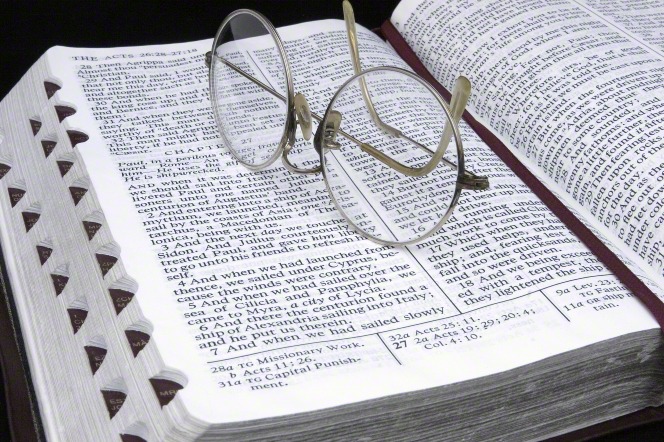
Although there are countless English translations of the Bible, Latter-day Saints who speak English use the King James Version, first published in 1611 and named for the English monarch who commissioned the translation. The Bible Dictionary explains:
With the discovery of more ancient manuscripts not available to the King James translators, many translations of the Bible have been produced since 1900 by Bible scholars. However, based on the doctrinal clarity of latter-day revelation given to Joseph Smith, the Church has held to the King James Version as being doctrinally more accurate than these recent versions. The newer versions are in many instances easier to read but are in some passages doctrinally weaker in their presentation of the gospel. Therefore, the King James Version remains the principal Bible of The Church of Jesus Christ of Latter-day Saints.
The Church of Jesus Christ publishes its own version of the King James Bible in English. This edition, first available in 1979, did not change scriptural text but added valuable study aids. Elder Jay E. Jensen, at the time, the director of Scriptures Coordination for the LDS Church, explained:
These aids clear away many obstacles that keep people from using the scriptures and serve as a vast reservoir of knowledge and spiritual power.
The LDS edition of the Bible is cross-referenced with the other books in the Mormon canon. The study aids include a Bible Dictionary, Topical Guide and an Appendix with a Gazetteer and Bible maps.
The Mormon Church also produces its own version of the Bible in Spanish. This is based on the 1909 edition of the Reina-Valera translation instead of the King James Version and has modernized grammar and vocabulary. The Spanish LDS Bible contains study helps, including footnotes and chapter headings, a Guide to the Scriptures and Selections from the Joseph Smith Translation of the Bible. Again, the Church does not change the meaning of biblical scripture to suit its doctrine.
The Mormon Church also has a list of preferred Bible translations for other languages. These are not published by the Church.
Gifts of the Bible from the Mormon Church
Since the days that Jesus Christ walked the earth, His disciples have been seeking to share the good news of the gospel with the world. It is in this spirit that The Church of Jesus Christ offers a free copy of the King James Bible to those of any faith. In addition, The Church of Jesus Christ has produced videos of Bible stories that are available for all. President Henry B. Eyring said:
The First Presidency has authorized the creation of a facility in the deserts of Utah in which scenes from the Savior’s ministry could be re-created and filmed. The objective in that effort has been to remain true to the scriptural text. Like the scriptures which these short films follow faithfully, they may seem to you quiet. Your faith and the Holy Ghost will create the emotion these world-changing events deserve.
The project will yield more than 100 vignettes from the life of the Savior, from His birth to His Resurrection. Each video is taken directly from the King James Bible. Elder Lynn G. Robbins said:
We intend for these videos to be used freely by individuals, families, and groups. We want to help our own members strengthen their faith in Jesus Christ, and we offer this freely to other churches who may wish to use these videos in a similar way. The message of the Lord Jesus Christ needs to be shared as widely as possible throughout the world.
It is our hope that these New Testament videos will help people to visualize what they have only been able to imagine, and to more deeply feel the truths of the New Testament as they witness the Savior’s life and not just as they read about it. Hopefully, there will be entirely new insights into the Savior’s character that will help viewers feel of His love and inspire them to want to be more like Him.
The Bible videos are available to view or download. You can request a free copy of the Holy Bible from The Church of Jesus Christ.
1. Moses & the Exodus: The Lord Prepares a People and a Prophet
This is the first in a four-part series about Moses and the Exodus. The story of Moses leading the children of Israel out of bondage and the miracles leading up to it is powerful. For thousands of years, Jews and Christians have found spiritual strength in the lessons derived from this Old Testament experience. Even […]
2. Moses & the Exodus: Pharaoh and the Plagues of Egypt
This is the second in a four-part series about Moses and the Exodus. Moses’ life can be divided into three 40-year time spans: his early years in Egypt, his sojourn in Midian and his mission as a prophet of God. The first article discussed his early years in Egypt and his sojourn in Midian. Now […]
3. Moses & The Exodus: Leading the Children of Israel out of Bondage
This is the third in a four-part series about Moses and the Exodus. Moses’ mission was to lead the children of Israel out of bondage. It was not enough to take the Israelites out of Egypt—he had to take Egypt out of the Israelites. Mormon scholar Rodney Turner explained: Act one of the drama of […]
4. Moses & the Exodus: Learning to Live the Ten Commandments
This is the last in a four-part series about Moses and the Exodus. With Moses and the children of Israel out of Egypt and safely in the wilderness, the time had come for the next phase of this Old Testament prophet’s mission—to lead the people out of spiritual bondage completely. Mormon scholar S. Kent Brown, […]
What Revelation 22:18-19 Says about Additional Scripture & Revelation
Many Christian denominations believe that the Bible is the word of God, and that the scriptures begin and end with this holy writ. Revelation 22:18-19 is often cited as evidence of this claim. In this scripture, John the Revelator writes: For I testify unto every man that heareth the words of the prophecy of this […]